
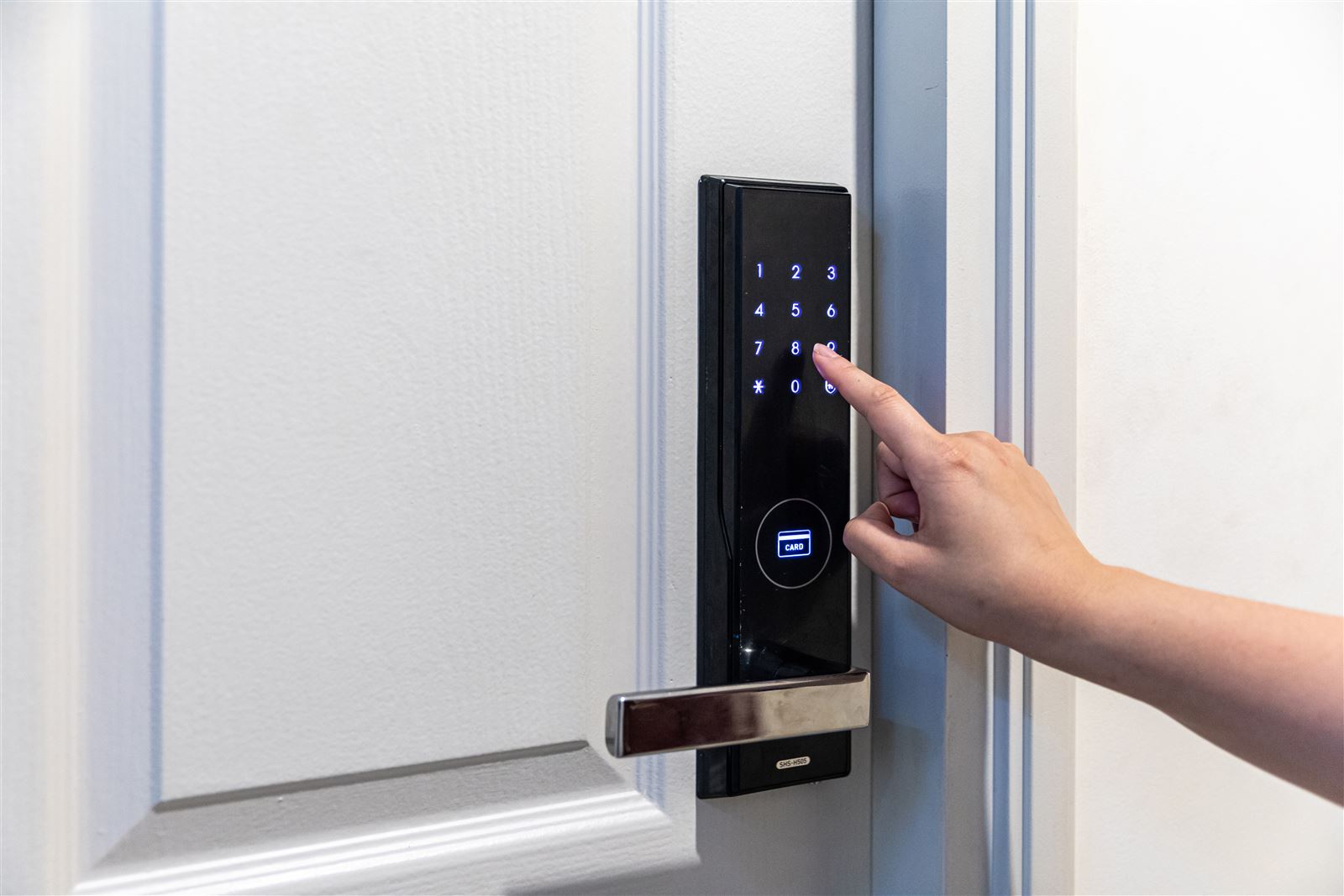
A hotel or serviced apartment lock has to do more than open a door. It has to issue a key at 11pm, survive forty check-ins a day, tell you who entered room 512 last Tuesday, and still let everyone out in a fire. That is why the RFID versus BLE question is really an operations question.
An RFID lock reads a card or fob. The decision is made inside the lock from a list loaded onto it, so the door keeps working when the network is down. Cards are cheap, batteries last, and there is nothing for a guest to install.
A BLE lock does the same job with a Bluetooth radio, and the credential usually lives in a phone app. Some BLE locks still decide offline from cached keys; others check with a server through a gateway before they open. That difference matters more than the radio itself.
For a staffed hotel, RFID is mature, predictable and cheap per door. Cards cost a dollar or two, battery draw is low, and reception can hand over a key in ten seconds. For a 120-room property with a desk open around the clock, a well-specified RFID system is often the sensible answer.
The catch is the desk. Every check-in needs a card, every lost card needs a replacement, and every departure leaves a credential that should be cancelled. Card technology matters too. Older MIFARE Classic cards can be cloned with tools that cost less than dinner. Specify DESFire EV2 or EV3, protect the sector keys, and keep an issuance log.
BLE shines when nobody is standing at a desk. Serviced apartments, short stays, late arrivals and buildings with one overnight staff member all benefit from issuing a key by email or app with a start and end time built in. When the lock is online, revocation is instant, which matters when a guest extends, cancels or disputes a charge.
The trade-offs are real. Guests need a charged phone, the app installed and Bluetooth permission granted. Older guests and international visitors often need a fallback card anyway. Locks need gateways to stay online, and BLE range has to be tuned so the door opens at the door, not from the lift lobby.
Every electronic lock is a battery-powered computer. Expect one to two years from a set of cells, less on busy doors, and less again when the lock is talking to a gateway. Battery warnings must reach someone who acts on them, not an inbox nobody reads.
Networks are the other hidden cost: a gateway per floor or per ten doors, power and cabling, and someone who owns the system after handover. The payoff is the audit trail. A good system records which credential opened which door, at what time, and which staff master was used during a cleaning window. That record is what settles a disputed charge or an insurance claim.
Egress sits above all of it. Electronic locks are fitted to doors people must be able to leave in an emergency. Fail-safe and fail-secure are not interchangeable words; they describe what the lock does when power fails, and the wrong choice on a stairwell door is a life-safety issue.
Fire-rated doors need hardware that keeps the rating, and any access control on an exit path has to release on alarm. Bring a licensed installer in early enough that door hardware, fire rating and building code are checked together, not after the doors are hung.
Like for like, an RFID lock is usually cheaper per door. A BLE system adds gateways, app infrastructure, integration with your property management system and sometimes a subscription. That extra cost can pay for itself quickly if it removes a nightly reception shift or lets a serviced apartment building run with fewer staff.
Retrofit is where budgets blow out. Door thickness, existing mortice preparation, heritage doors, fire labels and the condition of the frame all affect what fits. A staged approach works well: fit BLE-capable locks now, run them on cards, and switch on mobile keys when the operating model is ready.
Ask five questions. Who checks guests in, and at what hours? How often do cards go missing? Do you need instant revocation? Is there power and network at every door? Who answers a lockout at 2am? The answers usually point clearly to one design.
WIS Security specifies access control for hotels, serviced apartments and apartment buildings across Melbourne, including RFID and BLE door locks, gateways and property management integration. See our access control service or book a site assessment.
WIS Security designs, installs and supports security systems across Melbourne. See our access control design and installation service or request a free assessment.