
In almost every case the C-Bus system is fine. The app, the gateway, or the network behind it is not — and the fix is smaller than you expect.
When the app stops, the first assumption is that the whole system has failed. Usually the opposite is true: the wall keypads still work, the scenes still run, and the bus is healthy. What broke is the newest and least durable part of the system — the gateway, the app, or the network in between.
Here is what actually happens, in the order we find it.
App control needs a bridge between C-Bus and your network: a 5500CN/CNI network bridge, or a 5500PCU USB interface on a small server. Those devices are small computers. They have power supplies, firmware and an IP address, and any of those can fail or change.
A router replacement, a new ISP modem, or a DHCP lease change can move the bridge to a new address and silently break the app while the wall panels keep working perfectly.
Many C-Bus apps were built for a specific gateway and a specific era of iOS and Android. When the vendor stops updating, an operating system update is enough to kill it. Sometimes the app still installs but can no longer reach the cloud service behind it, because that service was retired.
This is the single most common reason a working C-Bus house loses phone control in 2026.
New router, new Wi-Fi mesh, new VLAN, new firewall, double NAT, or a port forwarding rule that disappeared. C-Bus itself does not care — but anything that reaches it over IP does. We see this most often after an NBN upgrade or a building changing its shared internet service.
The C-Bus programming lives in a Toolkit project file, usually on the dealer's laptop. If the dealer has retired and nobody kept a copy, changes become harder. The good news: on most systems the project can be retrieved from the network, rebuilt, and documented — which is exactly what a takeover involves.
If the gateway is alive and the app still exists for your phone, this is the cheapest path. We re-address the bridge, restore the backup, and test every room.
If the bridge has failed but the app is still supported, a replacement interface can bring the original app back to life.
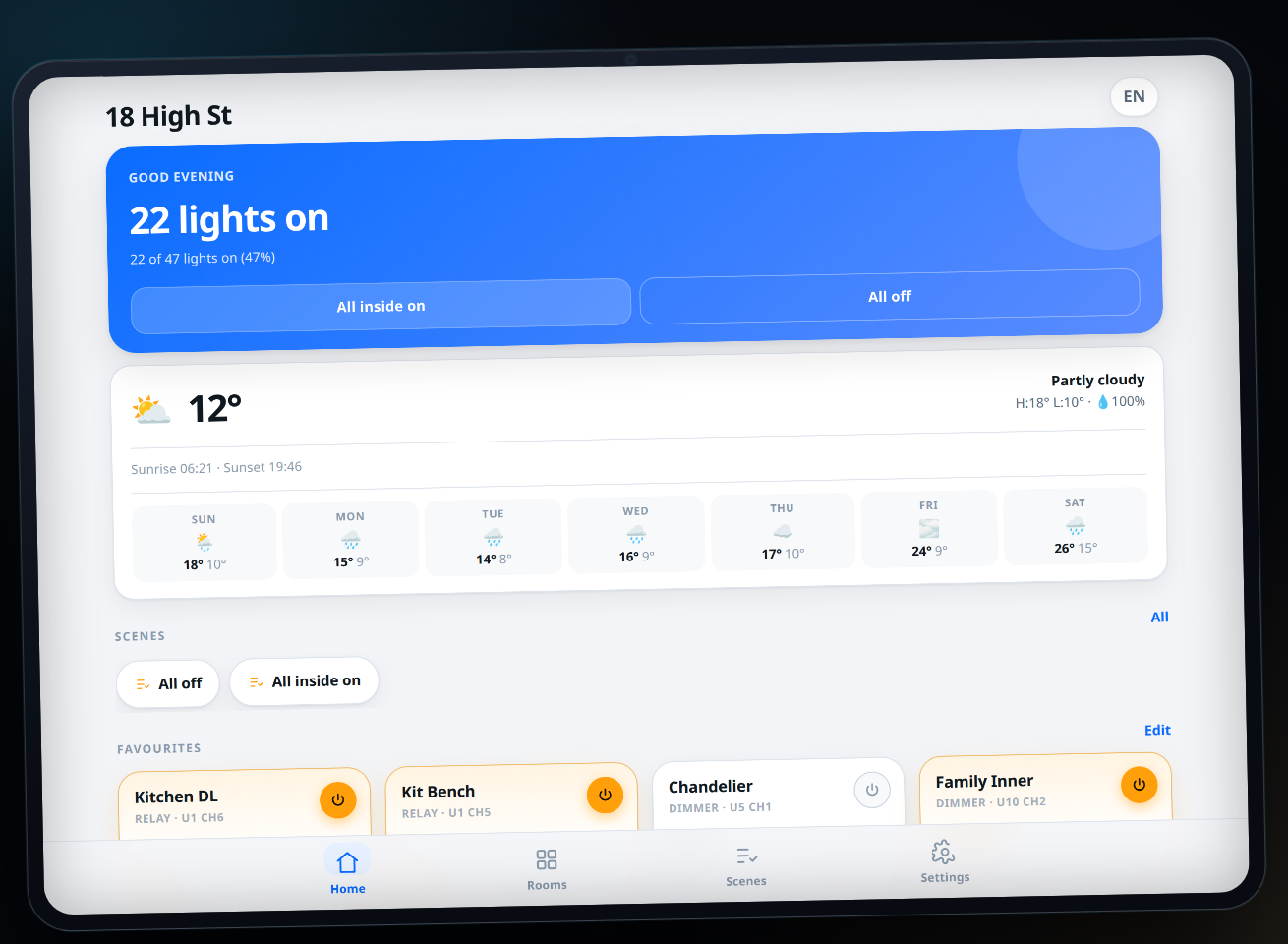
This is what WIS Living does. Instead of depending on a vendor's cloud, a small controller in the house talks to C-Bus directly, runs the schedules locally, and serves the app. Your keypads, dimmers and wiring stay exactly as they are.
Almost never necessary for an app problem. If someone recommends ripping out working C-Bus modules because "the app is old", get a second opinion.
Installation is one-off: $699 for homes up to 30 channels, $999 for 31–70 channels, $1,599 for 71–120 channels, assuming a 5500PCU or 5500CN/CNI is already fitted. Care plans start at $59 per month and include the app, a daily system check and fault notices.
If the interface is missing or dead, we quote that separately and confirm it before ordering.
An app problem is a gateway problem. Working dimmers and relays are worth keeping — and in many cases they are no longer easy to replace. Repair the gap, not the system.
If you are not sure whether your system can support app control, we will check the interface and tell you honestly. See also repair, upgrade or replace and the seven faults behind most C-Bus call-outs.
WIS Security designs, installs and supports these systems across Melbourne. WIS Living C-Bus app control or Check if your C-Bus can be connected.